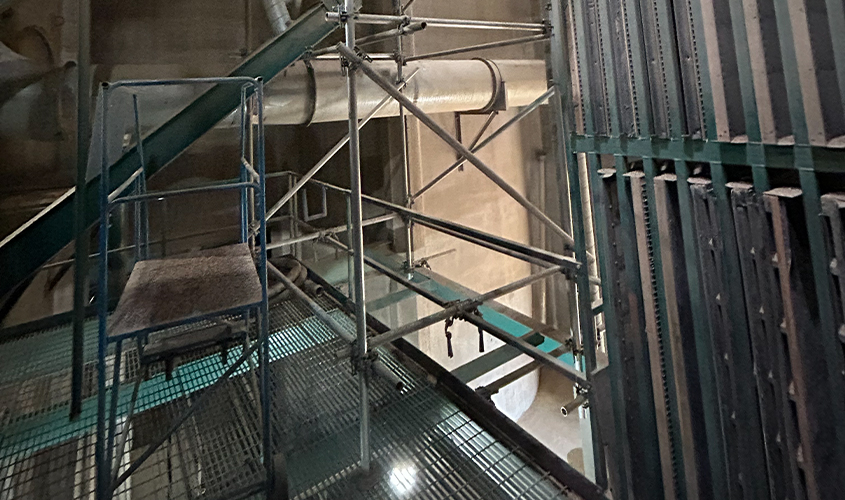
Working in confined spaces is one of the most difficult and risk-sensitive tasks on any industrial or commercial site in Alberta. These areas are tight, restricted, and often filled with built-in hazards that limit movement and make routine work much harder.
Confined space hazards can appear in tanks, silos, boilers, tunnels, maintenance pits, processing areas, and other structures where workers have limited room to move or exit.
This blog outlines the most common challenges of confined space work and demonstrates how specialized scaffolding services offer reliable access, enhanced safety, and improved workflow for teams operating in these demanding environments.
Why Confined Spaces Are So Difficult to Work In
Confined spaces create a unique set of problems that are not found in open job sites. There is limited room to enter, strict safety rules, and a higher level of risk during every task. Alberta workplaces face added difficulty because many industrial facilities include older structures, deep tanks, or hard-to-reach maintenance areas where movement is restricted.
Confined space safety in Alberta requires careful planning, certified workers, and engineered access systems that reduce physical strain and prevent accidents. Scaffolding plays an important role in creating safer working conditions in these spaces.
Challenge 1: Extremely Limited Entry and Exit Points
Many confined spaces only have a single opening. This makes it difficult for workers to enter safely and even harder for them to bring tools or equipment inside. A single tight entry point also increases risk during emergencies.
Workers need a stable and reliable access method, but traditional ladders or improvised solutions do not offer the level of control required in these conditions.
How Scaffolding Improves Entry and Exit
Specialized scaffolding creates safe and stable routes into tight spaces. These systems can be designed with custom stairs, platforms, or internal structures that support structured access instead of forcing workers to rely on narrow or slippery openings.
With engineered scaffolding systems, the entry point becomes safer, more predictable, and easier to manage during both normal operations and emergencies.
Challenge 2: Poor Mobility and Lack of Working Room
One of the biggest challenges of confined space work is simple movement. Workers often cannot stand fully upright, turn easily, or reach tools positioned above or beside them. This slows down every task and increases fatigue.
A tight space also makes overhead tasks such as welding, repairs, inspection, coating, or cleaning much harder to perform.
How Scaffolding Supports Better Movement
Scaffolding for confined spaces creates stable, level platforms that allow workers to move with confidence. Inside tanks, silos, or boilers, multi-level scaffolding can position workers at exactly the height they need. This eliminates unsafe stretching, twisting, or overreaching.
When workers can move freely, tasks become safer and more efficient. Proper access also reduces strain, which helps maintain productivity over long projects.
Challenge 3: Confined Space Hazards That Increase Safety Risks
Confined spaces typically contain hazards that do not exist on open job sites. These include atmospheric hazards, limited airflow, higher heat exposure, and increased noise. There is less space to escape from falling objects or mechanical equipment. Tools and materials can shift suddenly because the environment is tight and enclosed.
These confined space hazards become even more dangerous when workers cannot move quickly or find a safe position to stand.
How Scaffolding Reduces Hazard Exposure
Engineered access systems help reduce physical hazards by giving workers a secure footing, stable handholds, and platforms built to support weight safely. Scaffolding also reduces the risk of dropped tools because equipment can be positioned on fixed surfaces instead of being held in unstable hands or placed on uneven floors.
By improving balance, stability, and support, scaffolding helps lower the risk of slips, trips, and impact injuries inside hazardous areas.
Challenge 4: Difficulty Positioning Tools, Equipment, and Materials
Tight spaces make it difficult to bring tools inside. Workers often have no place to set down materials or equipment. They might be forced to hold heavy items at awkward angles or rely on makeshift supports that increase the risk of injury.
For welding, inspection, mechanical repairs, painting, coating, or cleaning work, a lack of proper workspace is a major barrier.
How Scaffolding Provides Secure Working Platforms
Scaffolding creates reliable work surfaces that allow safe placement of tools and materials. These platforms can be designed to include staging areas, accessory brackets, and stable support points that improve workflow inside tight industrial spaces.
This reduces manual handling injuries and allows workers to perform tasks more accurately. It also speeds up the project by providing a predictable, stable environment for equipment.
Challenge 5: High Risk During Emergency Response
Confined spaces are high risk during emergencies because rescue teams have limited access. Workers cannot always exit quickly, and poor visibility or tight corners make evacuation more complex.
These spaces require a planned and structured approach to emergency readiness.
How Scaffolding Supports Safer Emergency Planning
Scaffolding provides clearer routes that simplify evacuation. Well-designed access systems give rescue teams stable and predictable paths into the space. Platforms improve visibility and allow workers to remain calm during emergency events.
By ensuring workers have dependable access from the moment they enter to the moment they exit, scaffolding becomes a key part of safer emergency response planning.
Why General Scaffolding Is Not Enough for Confined Spaces
Not all scaffolding is suited for confined or hazardous areas. These projects require system components that can fit through small openings, designs that can be adapted to curved or vertical structures, and materials that can withstand industrial conditions.
Confined space scaffolding requires certified installers, engineered drawings, and compliance with Alberta’s safety requirements. Using basic or untested access solutions increases risk and makes confined space work even more dangerous.
How Green Scaffolding Designs Safe Access for Confined and Hazardous Areas
Green Scaffolding provides specialized scaffolding for confined spaces and hazardous environments across Alberta. Every structure is engineered to give workers safe access, stable platforms, and reliable movement inside tanks, silos, boilers, pits, and other restricted work areas.
Our temporary access systems are designed to meet CSA and OHS requirements and are built for the demanding conditions found in industrial sites. We install and dismantle efficiently to reduce downtime and help teams work safely in tight or complex environments.
Final Thoughts
Confined spaces are some of the most challenging and high-risk areas on any job site. They limit movement, restrict visibility, and expose workers to hazards that require precise controls. Scaffolding plays a crucial part in improving confined space safety in Alberta by giving workers stable access, better mobility, and structured platforms that support safe and efficient work.
Green Scaffolding provides engineered access solutions that help teams work confidently inside these demanding spaces and complete their projects with greater safety and stability.